Stella Maris by Cormac McCarthy
$17
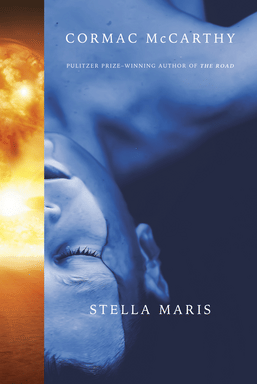
Alice is (supposedly) a brilliant twenty-one-year-old mathematician who has checked herself into Stella Maris, a mental institution. Her brother, a failed physicist and race care driver, is in a coma and the doctors want her to pull the plug, but she can’t. Circle back to that supposedly: Alice is not really a person so much as pure mind, a vessel for ideas, and the book unspools as a dauntingly intense meditation on the limits of knowledge, specifically mathematical knowledge, which encompasses meanings mere language cannot. It is also about the tension between the conscious and the unconscious and the ways that humans remake the world we apprehend—through words, which deform all they come in contact with, but also through the advanced mathematics that enable both new ways of seeing and new pathways of destruction (Alice’s father was part of The Manhattan Project). And then there are strange miracles, like the invention of the violin. Is this a novel or a philosophical dialogue? A conversation between a troubled patient and a plodding therapist, or something more like a Greek myth recast for our therapy-infected age, the confession of a fallen minor divinity granted access to the ends of knowing, haunted by a glimpse of hell, the legacy of a godlike father, and an incestuous love for a brother seemingly lost, though he will return from the dead in future she cannot see? Most of this book sat at the far edge of what I can apprehend, but it was exhilarating to read, to see the light and shadows cast by a more brightly burning mind. (Speaking of: Joy Williams’ review of this book and its companion, THE PASSENGER, is an illuminating read.)
2 months ago
Comments


Follow even*cleveland
By submitting, you agree to our Terms and Privacy Policy