Novel on Yellow Paper by Stevie Smith
$7.26
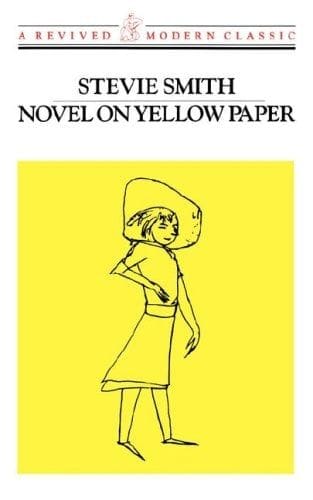
Stevie Smith's Novel on Yellow Paper, published in 1936, is electrifying from the first sentence:
"Beginning this book (not as they say book in our trade—they mean magazine) beginning this book, I should like if I may, I should like, if I may (that is the way Lord Phoebus writes), I should like then to say: Good-bye to all my friends, all my beautiful and lovely friends.
And for why?
Read on, Reader, read on and work it out for yourself."
The narrator, one Pompey Casmilus, is the questing and aware literary love child of Gertrude Stein and Virginia Woolf, keyed in to the peculiarities, hypocrisies, happinesses, and evils of life for a young white single working woman in 1930s Britain. She is the bolder foremother of lesser autofioctionalists to come (obvious threads from Smith's own life are woven into Pompey's) and the garrulous, erudite, funny, and oblique cousin to the narrator of Anna Burns' Milkman. The novel lopes away with a relentless, singular, off-kilter energy, following Pompey's spiraling thoughts on everything from writing the book (at the office, on yellow notepaper) to work, broken engagements, the problem of marriage, internal hypocrisies, Germany's looming menace, beloved friends, joyous sex, and tigerish aunts. Smith knows who she is writing for:
"Reader, I will give you a word of warning. This is a foot-off-the-ground novel that came by the left hand. And the thoughts come and go and sometimes they do not quite come and I do not pursue them to embarrass them with formality to pursue them into harsh captivity. And if you are a foot-off-the-ground person I make no bones to say that is how you will write and only how you will write, And if you are a foot-on-the-ground person, this book will be for you a desert of weariness and exasperation. So put it down. Leave it alone. It was a mistake you made to get this book. You could not know."
If you are a foot-off-the-ground person, I cannot recommend it enough.
3 months ago
Comments



Follow even*cleveland
By submitting, you agree to our Terms and Privacy Policy